
4-Part Dynamic Mindfulness Course For School Communities


4-Part Dynamic Mindfulness Course For School Communities
Build practical skills for stress regulation, resilience, attention, and readiness to learn with this 4-part, on-demand course for school communities.
Practical, Trauma-Informed Mindfulness Training for Educators and School Teams
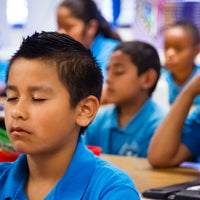
Stress does not always look the same. One student may become restless and reactive. Another may shut down. Educators and school professionals navigate those differences while managing their own stress and responsibilities. Dynamic Mindfulness helps school communities develop a broader set of responses.
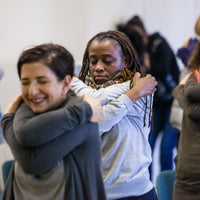
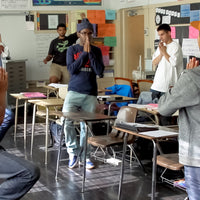
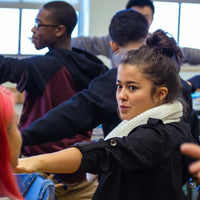
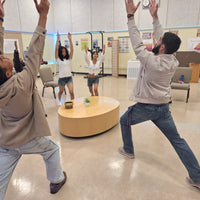
This 4-part, on-demand course introduces Niroga Institute’s Dynamic Mindfulness approach, combining movement, breath, attention, neuroscience, trauma-informed practice, and real-world application.
Learn at your own pace, experience the practices yourself, understand the theory behind them, and explore how to adapt what you learn for the students, colleagues, families, and communities you support.
Explore The Curricula
What You’ll Learn in the Dynamic Mindfulness Course

Understand Stress. Experience the Practice.
Part 1: Foundations of Dynamic Mindfulness
You will be introduced to the foundations of Dynamic Mindfulness and how Niroga integrates mindfulness, movement, neuroscience, trauma research, and somatic approaches into a practical framework for regulation. You will also experience the core A, B, C practices: Mindful Action, Breathing, and Centering. In Part 1, you’ll explore:
- The foundations of Dynamic Mindfulness
- Mindful Action, Breathing, and Centering
- The impact of chronic stress
- Present-moment awareness
- Guided Dynamic Mindfulness practice
Build Capacity By Building Agency
Part 2: Trauma-Informed Practice & Everyday Integration
This section explores how trauma can affect a person’s sense of safety, participation, and response to stress, and why practices should make room for choice, options, invitational language, and concrete sensations. You will also explore how small, repeated practices can become part of daily routines. In Part 2, you’ll explore:
- Psychological trauma and stress responses
- Choice, agency, and invitational language
- Frequency and consistency of practice
- Prevention, early intervention, recovery, and self-care
- Integrating mindfulness into everyday activities


Recognize the State. Expand Your Options.
Part 3: Window Of Tolerance & the Stress Response
This section introduces the Window of Tolerance and how activation can shift toward fight, flight, freeze, distraction, or disengagement. You’ll explore how movement, breath, and attention can be adapted to meet different states. The goal is to build more options for supporting regulation, recovery, and re-engagement. In Part 3, you’ll explore:
- The Window of Tolerance
- Fight, flight, and freeze responses
- Releasing and energizing practices
- Strengthening, relaxing, and focusing
- Adapting practices to different needs
From Individual Practice to Schoolwide Capacity
Part 4: Neuroscience, Evidence & School Implementation
This section connects Dynamic Mindfulness with executive function, stress resilience, and social-emotional learning. You’ll also explore research on student and educator outcomes and ways to move from personal practice into everyday application. The focus shifts from learning the tools to making them sustainable across schools. In Part 4, you’ll explore:
- Executive function and mindful movement
- Stress resilience and brain states
- Dynamic Mindfulness and SEL
- Research and program outcomes
- School and workplace implementation

What Attendees Are Saying About Our Trainings
Over 90% of attendees report reduced personal stress, anxiety, and anger, as well as a greater capacity to stay calm and grounded, improved focus and engagement with their students or children, and more positive work, home, and classroom environments.

“I tell my students I want to pass them along into 6th grade as a person who's ready to be in 6th grade, as a good community member, a good person on the inside and out, a good family member, and mindfulness has been a good teaching tool for that.”
Sam Hess, 5th grade teacher, King-Chavez Elementary School
“My favorite part about it is that it makes you very aware of how you are feeling, and it just connects me to myself, to my soul in a way, where I can fully understand what’s happening inside my body and outside my body. It’s really beautiful, actually!”
Brianna, high school student, Mission High

Four Parts. Approximately Six Hours. Learn at Your Own Pace.
Professional Learning That Fits Around Your Schedule
This Dynamic Mindfulness training for School Communities is organized into four on-demand parts, making it easier to engage with the material at a pace that works for you. Watch one section at a time. Pause to practice. Return to a concept. Revisit a movement. Take notes. Apply something before moving forward. Build your understanding over time and return to the course whenever you need a refresher.
Proven Relevant in School Settings
After surveying morethan 50 training participants from the San Lorenzo Unified School District, 98.15% said they increased their skills and knowledge, and 100% said they could take new tools from the workshop into their lives and programs. Participants pointed to real moments where these practices could help: supporting students before tests, responding to dysregulation, shifting classroom energy, and more.

What Sets Niroga's Approach To Movement and Mindfulness Apart?

Trauma-Informed Approach
By integrating mindful movement into each practice, DMind supports the regulation of the nervous system, making it safe and effective for individuals who have been impacted by trauma.

Evidence-Based Curriculum
The DMind model is supported by independent research, demonstrating significant improvements in emotion regulation, attention, and reduced anxiety.

Equity & Culturally-Focused
Dynamic Mindfulness is designed to be inclusive, accessible, and adaptable, with a strong focus on closing the wellness gap and promoting sustainable social-emotional equity for all.

Whole-System Approach
We work not just with individuals but across entire ecosystems, including school districts, community organizations, and workplace teams, creating systemic impact.